You can begin speaking Thai without mastering the alphabet first, but learning to read the script is a practical step for building stronger skills. Beginners can learn the Thai script in 15-30 hours, while getting started with the script and useful phrases can take 2-4 weeks. Thai lessons can help you practise pronunciation and tones alongside everyday conversation.
It’s normal to wonder whether reading and writing will slow down your progress. The good news is that you can build speaking confidence while learning the script at a manageable pace. This guide explains what to expect from lessons for adults in Singapore, including pronunciation, reading, course materials, certificates and ways to fit study around your schedule.
You’ll also learn how group and private formats differ, what to consider when comparing schedules, and how course fees are determined. From your first spoken phrases to reading Thai with greater confidence, you’ll have practical criteria for choosing a learning path that suits your goals.
Key Takeaways
- Decide whether to prioritise conversation, reading, or both, then choose a learning path that supports your goal.
- Build clearer speech by practising Thai tones and pronunciation alongside useful phrases.
- Compare course materials and certificate details with the skills you want to develop.
- Choose a group or private format based on your preferred learning pace and schedule.
- Understand which factors shape course fees so you can compare options with your needs in mind.
Do I Need to Learn the Thai Alphabet?
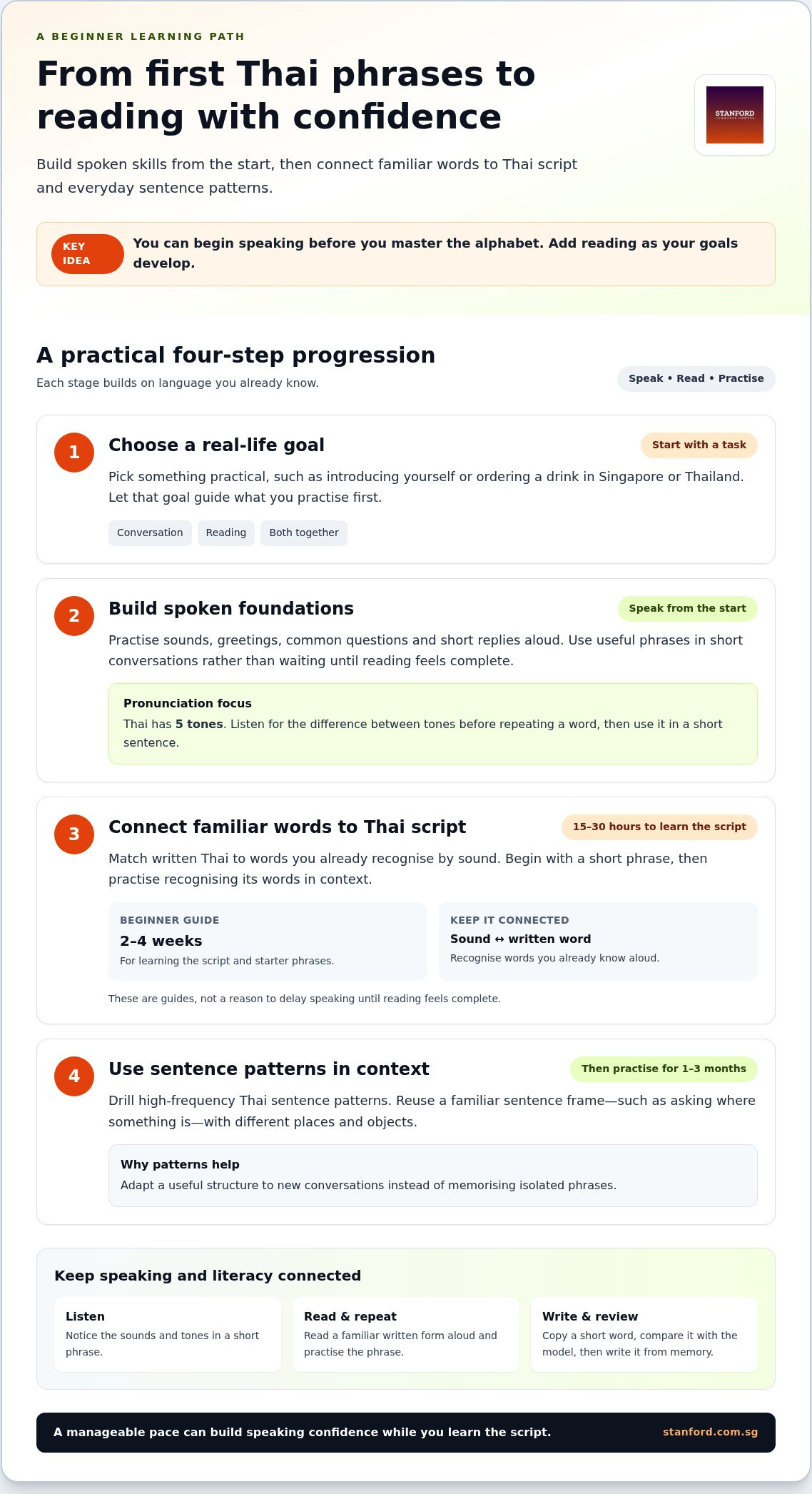
No, you don’t need to master Thai script before speaking. You can begin with conversations and starter phrases, then add reading as your goals develop. Still, learning the alphabet helps you recognise words without relying on romanised spellings, which can represent Thai sounds inconsistently. For beginners, learning the script can take 15-30 hours.
Choose your focus according to how you plan to use Thai. If you mainly want to greet people, order food, or make simple conversation, start with spoken phrases and pronunciation. If you want to read signs, menus, messages, or learning materials, include Thai script early. For a balanced goal, practise speaking and reading together rather than treating them as separate subjects.
How learning can progress
A beginner course often starts with practical language, then builds towards more independent use. Structured Level 1 programs give new learners a starting point for core vocabulary and everyday exchanges. A useful progression is to learn sounds and greetings, practise short conversations, then connect familiar words with their written forms. Each step supports the next.
Allow 2-4 weeks to learn the Thai script and starter phrases. This is a guide, not a requirement to delay speaking until reading feels complete. After that, spend 1-3 months drilling high-frequency Thai sentence patterns. Repeating patterns helps you adapt a familiar frame, such as asking where something is, to new places and objects.
A practical beginner plan
Use these stages to keep your study focused:
- Start with a goal. Choose a real task, such as introducing yourself or ordering a drink in Singapore or Thailand.
- Build spoken foundations. Practise greetings, common questions, and short replies aloud.
- Add the script. Match written Thai to words you already recognise by sound.
- Use patterns in context. Adapt one sentence frame to different conversations instead of memorising isolated phrases.
Thai grammar can make early practice feel more approachable. Verbs don’t conjugate, and nouns don’t change form to show singular or plural. Simple time words and context usually indicate when something happened. Learners can focus on those clues and the surrounding sentence instead of changing verb endings, leaving more attention for meaning and pronunciation.
Thai lessons should reflect the balance you want between speaking and literacy. Decide whether conversation, reading, or both are your immediate priority, then use that goal to guide your practice. You can start speaking before you read fluently, but learning the alphabet gives you a stronger foundation for recognising and studying Thai independently.
Thai pronunciation, script, reading and writing
Thai literacy and pronunciation support each other: written forms help connect sounds with words, while careful listening helps you speak more clearly.
Thai Script and Literacy Skills
Learning Thai script means recognising characters, reading words, and writing them accurately. Start by connecting a familiar spoken word with its written form, then practise recognising it in a short phrase. This gives reading practice context and purpose, unlike copying unfamiliar characters on their own.
To practise writing, copy a short word, compare each character with the model, then write it again from memory. Keep a small vocabulary list grouped by topic, such as greetings or food. Look for guided reading and writing practice that connects written examples with spoken language, not just explanations of how the script works.
Thai Pronunciation Practice
Thai has 5 tones, so pitch is part of how a word is spoken. Practise listening for the difference between tones before repeating a word. Then use the word in a short sentence, where you can focus on both its sound and meaning. Clear teacher feedback can help you notice when your pitch changes unintentionally.
Voice recordings make pronunciation practice more specific. Record a short phrase, listen back, and compare its pitch and rhythm with a clear model. Focus on one detail, such as keeping the pitch steady, then record the phrase again. Rather than judging your whole accent at once, compare one feature to hear what changed.
Reading aloud connects script and speech. Choose a short line you understand, read it slowly, and record yourself. Mark the word that feels hardest to pronounce and practise it separately before reading the full line again. This step-by-step routine makes script practice support speaking, rather than treating reading and pronunciation as unrelated tasks.
For steady progress, rotate between listening, speaking, reading, and writing. Listen to a short phrase, repeat it, read its written form, then copy it once. After practising, return to the recording and notice whether the phrase sounds clearer. Focus on being understood and improving steadily, not imitating every feature of another speaker’s voice.
If reading and writing are part of your goal, Thai reading and writing practice can give your study a clear literacy focus.
Course materials and certificates
Course materials shape how you practise between classes, while a certificate records a particular learning outcome. Compare materials according to your goal, whether that’s holding a conversation, reading Thai script, or writing a short message. Treat a certificate as evidence of the course completed, not automatic proof of fluency.
Useful materials connect classroom practice with everyday tasks. A vocabulary sheet grouped around food, transport, or introductions is easier to review than an unorganised word list. Sample dialogues show how phrases work in context, while writing exercises help you recognise and produce Thai characters. These materials make it easier to revisit a lesson.
Use each course resource for a specific purpose. A dialogue can support speaking practice, a character chart can help with reading, and a worksheet can prompt writing. If a lesson includes audio, listen, repeat, and compare your pronunciation. Keep personal notes with the class materials, especially for words that are difficult to remember or distinguish.
Make review practical and consistent. After class, choose a short dialogue and read it aloud. Add unfamiliar words to a topic-based list, then write a sample sentence using one of them. For a market visit, for example, group useful words around prices, quantities, and polite requests. This turns handouts into targeted practice.
Certificates can serve different purposes, so read their wording carefully. A course-completion certificate records that a learner finished a course; a proficiency certificate makes a claim about language ability. These are not interchangeable. Check the course name, level, skills covered, and stated basis for completion or assessment. A certificate’s value depends on what it documents and why you need it.
If you need evidence for work or personal records, choose a document that suits that purpose. An employer may want proof of course participation, while a learner may want a clear record of progress. A certificate alone doesn’t show how well you can speak, read, or write. Keep class exercises or feedback with it to show the skills you’ve practised.
Before enrolling, consider the learning plan, practice materials, and certificate description together. A conversation-focused course should give you opportunities to use spoken phrases, not rely only on written exercises. If reading is your goal, look for regular script practice. Matching resources to specific skills helps you choose a course that supports learning beyond class.
Group Thai class schedules and fees
Choose a class format that suits your learning goals and weekly routine. Group classes offer shared practice, while private and online options suit different preferences and schedules.
What types of Thai lessons are available in Singapore: group, private, or online? You can choose a group class, a private lesson, or an online class. Group classes suit learners who enjoy practising with others, while private lessons can focus more closely on personal goals.
How do I choose a qualified Thai tutor or language school? Compare the course level, teaching approach, practice time, and feedback. If your goal is conversation as a beginner, look for lessons with guided speaking practice.
What are the best online Thai lessons for learners in Singapore? The best fit combines a schedule you can maintain with live speaking practice and useful feedback. Choose lessons that give you opportunities to speak aloud, not just review written materials.
Which Singapore language schools offer Thai classes? Look for group, private, or online Thai classes that match your goals. A school with more than one format makes it easier to compare learning styles.
Do Singapore Thai classes offer trial lessons or placement tests? Trial lessons and placement tests aren’t standard features of every Thai class. A trial lets you experience a lesson, while a placement test can help identify a suitable starting level.
Schedules depend on the class format, course structure, and your availability. Before enrolling, compare lesson times with your work and personal commitments. A class that fits your calendar is easier to attend consistently. Note recurring meetings or travel days before settling on a regular time.
Group classes offer interaction with other learners, while private lessons can focus on your individual priorities. Online study avoids travelling to a classroom but still calls for a quiet space and dedicated practice time. Consider which setting helps you participate actively, especially in speaking exercises.
Fees depend on the lesson format, course length, materials, and class size, and are provided after a quote request. Compare what each course includes, such as teaching time, learning materials, and practice activities. The lowest fee alone won’t show whether a course matches your goals or schedule.
Use this checklist to compare options:
- Format: Choose group, private, or online learning based on how you practise best.
- Schedule: Match class times with your regular weekly commitments.
- Content: Look for activities tied to your goal, such as conversation or reading.
- Progress: Check how lessons build skills and provide feedback over time.
- Cost: Compare fees alongside materials, course structure, and class format.
Before enrolling, write down your main goal and preferred learning format. Compare class schedules and course content against your list. This practical step helps you find Thai lessons that fit your routine and the skills you want to develop.
Where can I take Thai lessons in Singapore?
Adults in Singapore can study Thai in group classes, private lessons, or online. The best place to start depends on how you prefer to learn and what you want to practise. If shared activities help you participate, consider a group. If you want individual focus, private tuition may suit you better. Online study can fit learners who prefer learning remotely.
For in-person study, consider your journey alongside the class timetable. A convenient route can make regular attendance easier. Think about your usual commitments before choosing a location. Thai lessons that fit your weekly routine are easier to maintain than a class that involves a difficult trip.
Match course content to your reason for learning. If you want to speak with Thai-speaking colleagues, look for practice based on everyday workplace exchanges. For travel, useful role-play could include asking for directions or ordering a meal. If literacy matters, choose lessons that include reading and writing alongside speaking.
Use this checklist to compare options:
- Set a goal. Choose a practical outcome, such as introducing yourself or managing a simple conversation.
- Pick a format. Decide whether group interaction, private focus, or online access suits you.
- Review the course plan. Match lesson activities to your goal and current ability.
- Compare the logistics. Consider travel, class timing, and where you can study comfortably.
- Understand the next step. Review the course information and enrolment process.
For online study, look for live speaking practice, useful feedback, and time to work through materials. Before class, test your audio and find a quiet space. Keep notes nearby for corrections and phrases to practise again. These small preparations help you take an active part in a remote lesson.
A beginner course can provide a clear starting point, while private study can focus on personal goals. Don’t choose by a broad course label alone. Consider the activities, format, location, and fit with your schedule. A good match makes it easier to stay engaged and practise consistently.
To explore a local option, review the Thai course options and consider which format best fits your goals.
Stanford Language Centre: Professional Adult Chinese learning in Singapore
Stanford Language Centre provides professional adult Chinese learning in Singapore. If Mandarin is another language you want to study, its classes include small-group options for expats and foreigners, Japanese speakers, and Korean speakers.
Choose a class based on the learning environment that suits you. A small group provides shared practice, while classes tailored to Japanese or Korean speakers reflect those learners’ language backgrounds. Consider your goals and preferred format as you plan your next step.
If you’re exploring Mandarin alongside your other language-learning goals, Stanford Language Centre offers adult courses, including small-group options for expats and foreigners, Japanese speakers, and Korean speakers. Visit stanford.com.sg to learn more.
Take the Next Step with a Clear Learning Goal
Start by choosing a situation where you want to use Thai. You might want to speak with colleagues, prepare for a trip, or understand written messages. A clear goal helps shape your study and gives you a practical way to notice progress. Consider which skills matter most before choosing a class format.
Stanford Language Centre offers group and private Thai classes for adults, as well as online Thai lessons. Consider which setting would help you practise regularly and stay engaged. With a specific goal in mind, you can choose Thai lessons that fit the way you want to learn.
Contact Stanford Language Centre to discuss your next step. Start with a practical goal, then build your learning routine around it.
Frequently Asked Questions
How much do Thai lessons cost in Singapore?
Fees depend on the course format, length, materials, and class structure. For a particular course, the price depends on those factors and is provided after a quote request. Compare what the fee covers, such as instructional time and practice materials, rather than comparing totals alone. This helps you judge whether a course suits your learning goals and schedule without relying on a broad market estimate.
Are there Thai lessons for beginners, intermediate, and advanced learners?
Course levels vary, and placement should reflect your current ability. Stanford Language Centre offers a structured Level 1 program for beginners. If you have prior study, focus on what you can already do, such as holding a short exchange or reading familiar words. Use that assessment to choose a suitable next learning step, rather than relying on a level label alone.
What is the typical duration and schedule of Thai courses in Singapore?
Stanford Language Centre’s basic Thai course consists of 10 Lessons over 2 months. The schedule depends on the course format and the available class times. If you choose private lessons, the teaching can be customised to your time and location. Add each session to your calendar and set aside time between classes to review what you learned.
What should I expect in a beginner Thai lesson?
Expect guided activities that help you practise useful language. A beginner session might involve greeting someone, introducing yourself, and answering a simple question. Prepare by choosing a situation you want to handle, such as meeting a Thai-speaking colleague. This gives the practice a clear purpose and helps you identify phrases to use again.
Are there Thai lessons focused on conversation, reading, writing, or business?
Yes. Options include conversational study, Thai reading and writing classes, and corporate Thai language training. Choose according to where you need Thai: everyday exchanges, literacy practice, or workplace communication. For a work goal, consider situations such as welcoming customers or speaking with colleagues. A focused course can centre practice on those communication needs.