Thai grammar is often more approachable than its pronunciation and script. Verbs don’t change form for tense or person, but learners still need to practise Thai’s five tones and unfamiliar writing system. If you’re considering Thai lessons in Singapore, choose a format that fits your goals and routine.
It’s understandable to wonder whether Thai will feel difficult, especially if you’ve never studied a tonal language. This guide explains what makes grammar manageable, where pronunciation takes practice, and how reading and writing fit into learning. You’ll also compare course length, schedules and class access, including group, private and online formats. Fees depend on the course format and duration and are provided after a quote request. By the end, you’ll have a clearer idea of what to look for and which kind of class could suit your next step.
Key Takeaways
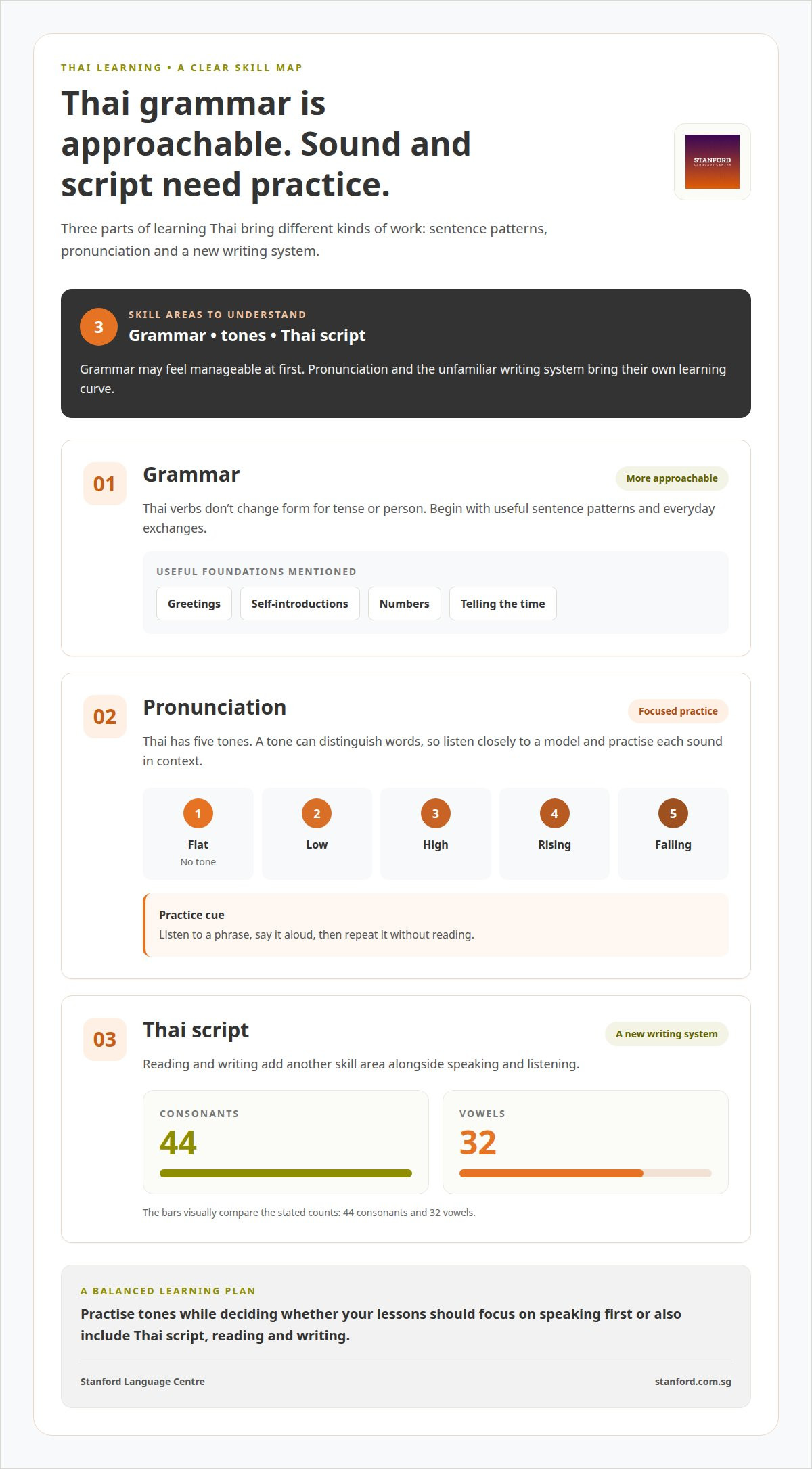
- Thai grammar may feel more manageable than expected, while tones and the writing system bring their own learning curve.
- Compare course format, duration and schedule against your goals and available study time before choosing a class.
- Build pronunciation skills by listening closely and practising the five Thai tones in context.
- Decide whether you want to focus on speaking first or include script, reading and writing in your learning plan.
- Consider class access and location as well as lesson content when planning a routine you can sustain.
Is learning Thai worth it?
Thai can be worth learning if you want to handle everyday conversations, travel more independently, or connect with Thai-speaking colleagues. Grammar may feel approachable when you begin with useful sentence patterns, but pronunciation takes focused practice. A beginner course can make the language practical from the first lessons, rather than leaving you with rules you cannot use.
Beginner Thai language courses in Singapore commonly build around familiar situations. Lessons may practise greetings, self-introductions, numbers and telling the time. Those building blocks help you introduce yourself, ask simple questions and follow basic exchanges. A course aimed at everyday situations gives you a clear purpose for each new phrase, such as greeting someone before asking for directions.
Basic conversation takes regular effort, not just classroom time. A tutor says learners may be able to pick up basic conversational Thai within 3 months with daily practice with a qualified Thai speaker. Use short, repeatable sessions between classes: listen to a phrase, say it aloud, then use it in a fresh example. Daily practice helps you notice sounds and retrieve words more readily during talking.
Try this simple practice routine after a lesson:
- Review the greeting and self-introduction phrases from class.
- Say each phrase aloud, then repeat it without reading.
- Practise numbers by saying prices, times or quantities you encounter.
- Use a short role-play, such as ordering a drink or asking for a location.
Which Thai language schools and tutors in Singapore have good reviews? Look for feedback that mentions beginner support, clear pronunciation guidance and practice for real situations. Reviews that describe a specific class experience offer more useful detail than a general star rating alone.
What should you look for when choosing a Thai tutor or language school in Singapore? Choose a beginner course with a clear lesson sequence, time for speaking practice and correction when you pronounce a phrase. Check that the class covers your goal, whether that is travel conversation, everyday exchanges or workplace communication.
Are there Thai lessons in Singapore for children, businesses, or travelers? Travellers can focus on greetings, numbers and common requests, while organisations can look for corporate Thai language training. For children, seek a course designed around their age and learning needs; adult beginner classes may not fit them.
For adults, Thai lessons are most useful when practice matches the conversations you want to have. Start with greetings and introductions, then add listening and speaking exercises. A steady progression makes new skills easier to use beyond the classroom.
Thai course durations, start dates and fees
Course length, lesson hours and materials all shape how you build Thai skills. Compare the course outline with your schedule and learning goals.
Course Length and Learning Hours
Course duration varies with the level, lesson frequency and topics covered. Compare guided hours, lesson length and the time needed to practise between classes. Regular speaking exercises can suit someone building everyday conversation, while a broader course may leave more room for reading and writing. Include independent review time in your plan, not just classroom hours.
Beginner courses focus on useful foundations, while more advanced lessons can develop longer conversations, richer vocabulary and detailed listening. Read the outline to understand the level and learning goals. For workplace communication, look for practice relevant to meetings or introductions. For travel, focus on common exchanges, directions and requests.
Start Dates and Fees
Start dates depend on the course schedule and enrolment cycle. Compare the start date with your work commitments, then consider whether the class meets often enough to support steady learning. If you want time to review the basics first, choose a schedule that gives you room to plan and organise your calendar.
Fees depend on course format, duration and included learning materials; the amount is given after a quote request. Check how the fee is presented, including whether GST and course materials are accounted for, before comparing options.
What Thai language courses are available in Singapore for beginners and advanced learners? Beginners can look for courses covering foundational conversation, while more experienced students can seek lessons that extend vocabulary, listening and fluency. A private Thai language class can suit learners who want lessons focused on personal goals, such as preparing for a career-related conversation.
What textbooks, teaching methods, and proficiency levels do Thai courses in Singapore cover? Course materials may include a textbook, worksheets or digital practice, while lessons can combine explanation, listening and speaking activities. Compare the syllabus with your current level. For example, a learner who can introduce themselves may need more than a beginner introduction to greetings.
Before enrolling, map your goal to the course sequence: identify your current level, choose the skills to develop, then compare the lesson hours and materials. This makes it easier to see whether a course supports speaking alone or includes Thai reading and writing. Explore the Thai language course as one option for planning your next step.
Thai pronunciation, script, reading and writing
Thai communication brings together sound, sentence patterns and a new script. When comparing Thai lessons in Singapore, check how the course balances these skills rather than focusing on speaking alone.
Pronunciation and Thai Script
Thai has 5 tones: flat or no tone, low, high, rising and falling. A tone can distinguish words, so listen to a model and repeat each sound before using it in a sentence. Thai script includes 44 consonants and 32 vowels. Rather than memorising every symbol at once, practise a small group, then spot those characters in short words.
The consonants are divided into 9 mid, 24 low and 11 high consonants. The vowel alphabet has 24 regular vowels and 8 special vowels. These categories provide a structure for learning symbols and their sounds. For example, practise identifying a consonant group, then pair a character with a vowel and read the resulting syllable aloud.
Practise basic grammar alongside pronunciation. Start with a short statement, then turn it into a question or request. For example, say what you want, then practise asking whether someone else wants the same thing. This helps you use sentence patterns in conversation instead of translating each English word separately, and gives you a practical way to discuss needs and preferences.
Reading and Writing Skills
Build reading skills by recognising consonants and vowels before combining them into words. For writing, copy a character, cover the example, and try writing it from memory. Thai reading and writing lessons can give dedicated attention to these tasks. Look for a learning plan that connects written symbols with pronunciation, so reading practice also supports speaking.
Try a short practice cycle: read a word, listen to its pronunciation, then say it aloud while looking at the script. Next, write the word from memory and use it in a simple sentence. This links reading, writing and conversation instead of treating each skill separately. Repeat the cycle with vocabulary you want to use in everyday life.
- Listen for all 5 tones, then repeat the word aloud.
- Practise consonants by their mid, low and high groups.
- Read short words using regular and special vowels.
- Write a familiar word from memory and use it in a sentence.
As you compare Thai lessons in Singapore, decide whether you want to prioritise conversation or include regular script practice. If you want to read signs, menus or written messages, include reading and writing in your routine. For a balanced plan, connect each new written word with its sound and a spoken example.
Class location and MRT accessibility
For an in-person Thai class in Singapore, plan your journey using the venue’s full address. Enter it into a journey planner before leaving, then compare the MRT route, any bus connection and the final walk.
Plan from the place you’ll actually travel from, such as home or work. A route that looks straightforward from one station may involve a different transfer from your starting point. Check the complete trip rather than judging accessibility by the nearest station alone. Save the destination in your map app to make the final leg easier to follow.
Consider the time of your lesson, too. For an after-work class, plan the journey from work and leave enough time to arrive and settle in. If you’re travelling from an appointment, check that route separately. These practical checks can help you decide whether in-person classes fit your routine.
If you plan to drive, review parking arrangements before setting out. Where parking is limited or unavailable, consider public transport or a drop-off plan. For a taxi or ride-hailing trip, use the complete venue address instead of a general area name. This helps direct the driver to the intended destination.
Use this simple journey-planning sequence:
- Enter the full class address in a map or journey-planning app.
- Compare MRT travel with any bus connection and walking time.
- Plan from your actual starting point, not a nearby landmark.
- Choose an alternative route if your usual connection is disrupted.
Accessibility can affect how consistently you attend. Compare the journey with your weekly commitments and consider how it will feel after a long workday. If travel makes regular attendance difficult, online Thai lessons let you learn without the commute.
Make the journey part of your learning plan. You could review a short phrase before class or listen to Thai audio during a suitable part of your trip. Keep the activity simple and avoid reading or using a device while walking. A realistic route and a manageable routine make it easier to focus on class once you arrive.
Before choosing a format, weigh the value of in-person interaction against the time and effort of travelling. Consider the door-to-door journey, transport changes and parking options. If travel doesn’t fit your schedule, online lessons offer another way to keep learning without a regular commute.
Thai group class schedules and fees
Thai lessons in Singapore are available in person, online and in small groups. Compare the schedule and format with your routine before choosing.
Group Class Schedules
Class schedules determine whether you can attend consistently alongside work and other commitments. Compare lesson days and times with your weekly routine, including travel time for in-person sessions. A weekday class may suit someone who finishes work nearby, while an online class can fit around a changing commute. Choose a schedule that leaves time to review between lessons.
Group learning adds interaction: students can practise a sentence with a partner, listen to different voices and respond in turn. This exchange can make new concepts more memorable than reading a phrase silently. A class that moves from guided practice to short conversations can build skills gradually. Check that the lesson sequence suits your level rather than assuming every group follows the same pace.
In-Person and Online Lessons
In-person classes give learners a shared space to listen, speak and practise with classmates. Online Thai lessons remove the commute and let you join from home or another quiet location. Both formats can support conversation practice, but the experience differs: in person, you interact directly with classmates; online, you need a reliable connection and a suitable place to speak aloud.
Choose the format that supports the practice you value and the routine you can maintain. If a group setting helps you speak more often, consider small-group lessons. If travel makes attendance difficult, online learning may be more practical. Compare the time needed to reach class with the time available for a remote lesson, then choose the option that leaves room for review.
Group Class Fees
The price depends on the course and is given after a quote request. Cost factors include the lesson format, course duration and materials. Compare what the fee covers, such as scheduled lessons and learning resources, rather than looking at the total alone. NUS alumni, staff and students receive a 10% discount off the course fee before GST.
Before comparing course fees, note the details that matter to you: format, schedule, length and included materials. Then weigh the interaction of a group against the flexibility of online learning. This helps you match your choice to your learning priorities rather than making assumptions about what every course includes.
A practical next step is to compare Thai class options against your preferred schedule and learning format. Note which arrangement gives you regular speaking practice, manageable attendance and enough time to review each lesson.
Stanford Language Centre: Professional Adult Chinese learning in Singapore
Stanford Language Centre offers adult Mandarin courses in Singapore for learners building practical Chinese skills. Its small-group Mandarin classes are tailored for expats and foreigners, Japanese speakers, and Korean speakers.
Choose a Mandarin group that suits your background and practise with learners who share a similar starting point. This could be a useful next step if you’re comparing language courses or adding Chinese learning to your plans. For Thai study, compare lesson formats and schedules, and consider whether pronunciation or script practice is your priority.
Contact Stanford Language Centre to discuss adult Mandarin classes and choose a suitable learning direction.
Choose a Thai learning goal and take the next step
Make your next step specific. Decide what you want Thai to help you do, such as handle a short conversation, read common signs, or communicate more confidently at work. Then choose one skill to practise first. A clear goal gives each lesson a purpose and helps you notice progress through practical tasks, not just completed pages.
Before starting Thai lessons in Singapore, consider the routine you can maintain. Set aside time to review, speak aloud and revisit new material between classes. Consistent practice helps turn lesson vocabulary into language you can use beyond the classroom. Keep your first goal manageable, then build on it as your confidence and interests develop.
Stanford Language Centre offers Thai learning options alongside its adult Chinese programmes. If you’re ready to explore a suitable next step, contact Stanford Language Centre. Start with one useful goal, keep practising, and let each new conversation move you forward.
Frequently Asked Questions
Is Thai grammar hard?
Thai grammar can feel manageable when you learn sentence patterns through examples. Start with a simple statement, then practise turning it into a question or polite request. Pay attention to word order and context rather than translating each English word directly. For instance, practise saying what you want, then asking whether someone wants the same thing. Short, regular exercises help make these patterns easier to use.
How much do Thai lessons in Singapore cost per hour or course?
Compare course fees alongside the lesson format, duration and included materials. An hourly comparison may not reflect the full course value if one option includes more guided learning or practice materials. Look at the overall course structure and what’s included rather than assuming every class is priced the same way. Consider whether you prefer a group, private or online format.
Where are Thai language classes located in Singapore, and how accessible are they by MRT?
A Thai language course venue is at 194 Upper Thomson Road, Singapore 574339. MRT accessibility depends on your starting point and route, so enter the full address in a journey planner and review transfers and the final walk. Allow time for the last leg, especially if you’re travelling after work. This door-to-door check gives a clearer picture than comparing stations alone.
What schedules and course durations do Thai lessons in Singapore offer?
Schedules depend on the course format and class timetable. A basic Thai course package consists of exactly 10 lessons over a 2-month period. To make that commitment workable, compare the lesson dates with your regular obligations and reserve time for review between sessions. If you’re balancing work and study, a consistent lesson rhythm can help you keep new phrases active between classes.
Are trial lessons or placement tests available at Singapore Thai language schools?
Trial lessons and placement tests depend on each school’s course setup, so they aren’t a universal feature. Beginners can start with a structured Level 1 course. If you’ve studied Thai before, note what you can already do, such as introducing yourself or following a short exchange. That gives you a practical basis for choosing an appropriate starting point and avoiding lessons that repeat familiar material.
Which Thai language schools and tutors in Singapore have good reviews?
When comparing Thai lessons, look for reviews that mention beginner support, clear pronunciation guidance and practice for real situations. Specific descriptions of class experiences are more useful than a general star rating.