A beginner Vietnamese class can introduce the six tones and numbers from 1 to 1000, while the right lesson format depends on how you want to use the language and fit learning into your routine. Onsite, online and private lessons each offer a different way to practise speaking and build confidence.
Learning Vietnamese can help you connect more easily with people in daily life, at work or with family. But choosing a Vietnamese class involves more than deciding to learn: your starting level, the activities you’ll practise and the lesson format can all shape your experience.
This guide explains what beginner, intermediate and advanced levels may cover, and how teaching activities support practical communication. You’ll also learn what to consider when comparing onsite, online and private lessons, and how certificates and attendance requirements may affect your plans. That way, you can focus on a learning path that suits your goals, schedule and preferred way of practising.
Key Takeaways
- Use your current speaking, listening and reading skills to find a level that feels challenging without being overwhelming.
- Look for lessons that turn new vocabulary and pronunciation into practical speaking practice.
- Choose between onsite, online and private lessons based on your schedule, learning preferences and opportunities to practise.
- Understand how certificates are awarded and what attendance expectations mean for your learning plans.
- Compare class formats in Singapore to find a learning path that supports your goals and routine.
Beginner, intermediate and advanced levels
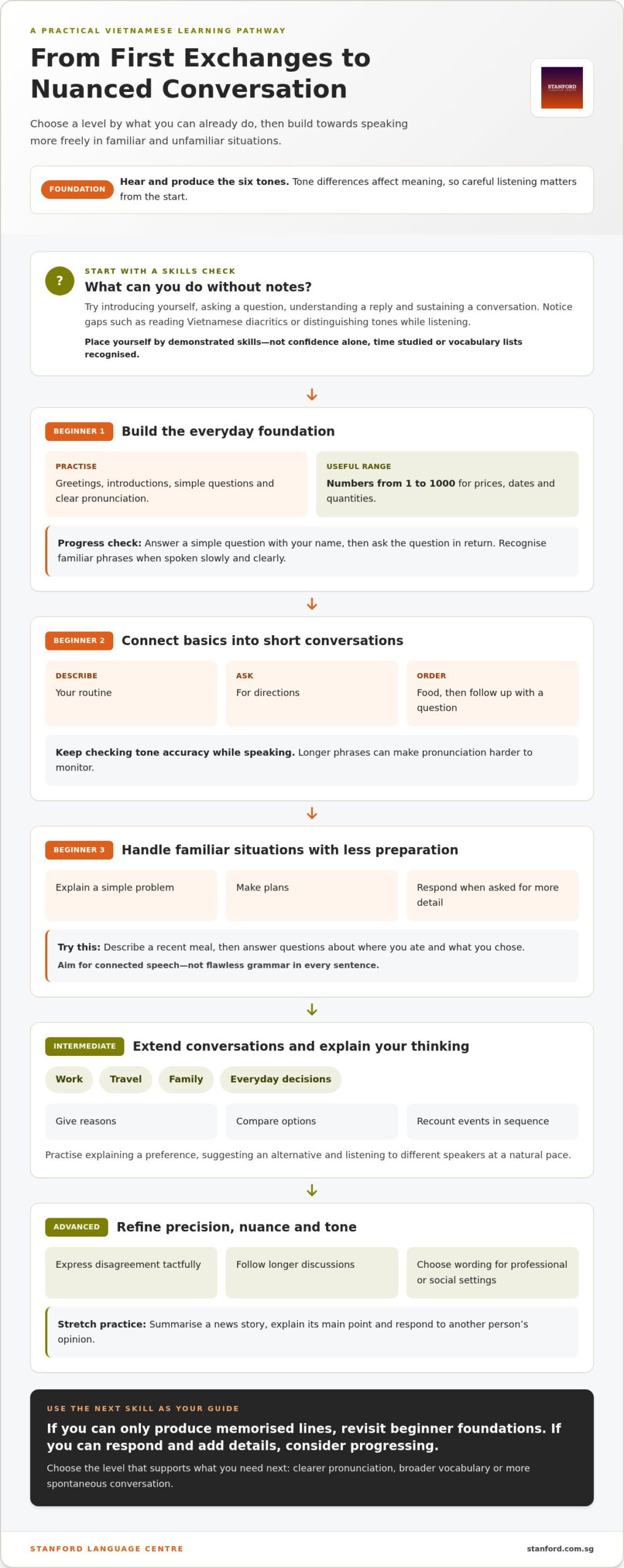
Choose a level based on what you can already do in Vietnamese, not confidence alone. In a beginner Vietnamese class, the first priority is connecting sounds, tones and useful phrases. Learners practise hearing and producing tone differences before relying on memorised words. Because tone affects meaning, careful listening is important from the start.
Beginner 1 builds the foundation for everyday exchanges. Learners practise greetings, introductions, simple questions and clear pronunciation. They also work with numbers from 1 to 1000, useful for prices, dates and quantities. A practical checkpoint is answering “Bạn tên là gì?” with your name, then asking the question in return. Learners should also recognise familiar phrases when spoken slowly and clearly.
Beginner 2 should extend those basics into short, connected conversations. Work towards describing your routine, asking for directions and ordering food with a follow-up question. For example, move from naming a dish to asking whether it contains a particular ingredient. Review tone accuracy while speaking, since longer phrases can make pronunciation harder to monitor.
Beginner 3 can focus on handling familiar situations with less preparation. Practise explaining a simple problem, making plans and responding when someone asks for more detail. A useful exercise is to describe a recent meal, then answer questions about where you ate and what you chose. The goal is connected speech, not flawless grammar in every sentence.
At the intermediate level, learners can build longer conversations around work, travel, family and everyday decisions. Practise giving reasons, comparing options and recounting events in sequence. For instance, explain why you prefer one meeting time, then suggest another. Listening to different speakers at a natural pace helps familiar vocabulary become easier to recognise beyond classroom examples.
Advanced learning focuses on precision, nuance and unfamiliar topics. Practise expressing disagreement tactfully, following longer discussions and choosing suitable wording for professional or social settings. For example, summarise a news story, explain its main point and respond to another person’s opinion. This kind of practice stretches comprehension while refining word choice and tone control.
For placement, list what you can do without notes: introduce yourself, ask questions, understand replies and sustain a conversation. Then identify gaps, such as reading Vietnamese diacritics or distinguishing tones while listening. Use these examples to guide your starting level. Placement should reflect demonstrated skills, not simply how long you have studied or how many vocabulary lists you recognise.
Before choosing a level, try a short self-check. Explain your daily routine aloud, ask a follow-up question and understand a simple reply. If you can only produce memorised lines, revisit beginner foundations. If you can respond and add details, consider progressing. Match the class level to the skills you need next, whether that means clearer pronunciation, broader vocabulary or more spontaneous conversation.
Teaching method and learning activities
A useful Vietnamese course connects new language with tasks you might do outside class. Instead of only memorising word lists, practise listening, speaking, reading and writing around one situation. For example, a lesson about ordering food can combine a short dialogue, menu vocabulary and a role-play. The teacher can model a phrase, then invite learners to adapt it to their own choices.
Practice works best when it moves from support towards independent use. First, listen to a short exchange and notice key phrases. Next, repeat it with attention to pronunciation. Then change details, such as the dish or meeting time, and perform the conversation without reading. This sequence helps learners apply new language and shows where more listening or speaking practice may be useful.
Learning materials can include dialogue sheets, vocabulary notes, audio recordings and short reading passages. Use them actively: mark phrases you want to reuse, record unfamiliar words, then write a fresh example sentence. A dialogue about introductions, for instance, can become a conversation about your workplace or neighbourhood. Keep one notebook or digital document for corrections, useful expressions and questions for your next lesson.
Independent learning supports classroom progress, but it doesn’t need to mean long study sessions. Set a repeatable routine around your course schedule. Listen to an assigned dialogue while commuting, review vocabulary after class, or practise a short spoken response at home. The amount of review depends on your goals, available time and comfort with the material. Consistent practice helps keep new phrases active between lessons.
Online learning can use the same activities through live conversation, shared documents and audio playback. A learner can practise asking for directions, then respond to the teacher’s prompts in real time. For independent practice, listen to a recording, pause before each reply and speak aloud. Vietnamese media, conversations with Vietnamese speakers and real-life tasks, such as ordering a familiar meal using prepared phrases, can add further practice.
To enrol in a Vietnamese class in Singapore, choose a suitable level and lesson format, then follow the course provider’s registration process. Prepare a notebook or digital notes, a pen, and any course materials supplied for learning. If you study online, arrange a quiet space and working audio equipment before the first lesson.
Before enrolling, consider how the teacher handles corrections. Feedback is most useful when it identifies a specific issue and gives you another chance to try. For example, after a role-play, note one phrase to improve and repeat the exchange. This turns an error into a practical next step instead of a vague reminder to practise more.
If you prefer structured lessons with guided speaking activities, explore Vietnamese language classes as one option for learning in Singapore.
Onsite, online, and private lessons
In Singapore, adults can compare small-group, private one-to-one, online and corporate Vietnamese lessons. The best format depends on where you want to practise and how much guidance suits your learning style.
Onsite and Online Lessons
In-person lessons let you practise face-to-face with a teacher and classmates. Pair activities can build listening and speaking skills through real-time exchanges. Online lessons let you join from home or work without travelling to a classroom. Compare lesson times, participation style and the technology required, such as a stable connection and working microphone.
Choose a format by picturing a typical lesson. In person, you might practise asking a classmate for directions, then switch roles. Online, you could work through the same exchange with a teacher using live audio. Both settings can support conversation practice; the key is how you prefer to interact and what fits your routine. A Vietnamese language course should give you opportunities to speak, not only watch or read.
Private lessons offer focused time with a teacher and can suit learners who want to work towards specific goals, such as preparing for workplace conversations or improving listening. Small-group lessons give learners opportunities to hear different voices and take turns speaking. Consider whether you benefit more from individual feedback or shared practice before choosing a format.
Class Locations and Course Types
Singapore learners can compare onsite venues by travel time from home or work, while online classes allow participation from different locations. For adults, options include small-group, private one-to-one, online and corporate training. For children, focus on whether a class is designed for their age, interests and learning needs. Compare the lesson format and activities, rather than assuming one approach suits every learner.
Adults can choose group, private, online and workplace-based Vietnamese lessons. For children, look for classes designed around their age and learning goals, with activities that keep them engaged. The right choice depends on the learner and the course design, so compare the intended audience and lesson structure.
A practical way to decide is to rank your needs. If meeting classmates matters most, consider small-group learning. If you need focused guidance for a work-related goal, private lessons may be a closer fit. If travel makes regular attendance difficult, online lessons can remove that barrier. Corporate training is designed around workplace learning, where colleagues can practise language skills for relevant professional situations.
Before committing, map a typical week. Note your work or family schedule, preferred lesson setting and time available for review. Then choose the format that makes regular participation realistic. For example, a learner with changing work locations may prefer online lessons, while someone who learns through peer conversation may value onsite group practice. This simple comparison helps align class format with daily life.
Certificates and attendance requirements
A certificate can document course completion, attendance or demonstrated learning, depending on the school’s assessment approach. These records serve different purposes. A completion document may show that you finished a course, while a skills-based assessment can show how you use Vietnamese in conversation. Treat a certificate and your actual language progress as related, but not identical, measures.
Before enrolling, identify why you want a certificate. If you need evidence for workplace development, consider whether a completion record meets that need. If your goal is practical communication, focus on the skills taught and how progress is reviewed. A learner preparing for customer conversations, for example, may value feedback on listening and clear responses more than a document alone.
Attendance matters because language learning builds across connected lessons. A class may introduce a dialogue, practise its phrases and then use them in a new situation. Missing the practice stage can make the next activity harder to follow. Keep a simple record of lesson dates, topics covered and exercises to revisit, so an absence doesn’t leave a gap in your learning.
Build an attendance plan around your regular commitments. Mark class times alongside work shifts, family responsibilities or recurring appointments. If a conflict arises, note the missed topic and review relevant notes before the next session. For example, if a lesson covered directions, practise the key phrases aloud and write down questions for your teacher. This turns a missed class into a clear catch-up task.
Course policies can define attendance expectations, late arrivals, missed lessons and access to make-up work. Read those details as part of your enrolment decision. Distinguish between a lesson recording, a replacement session and independent revision, since each supports learning differently. A recording may help you revisit explanations, while a live make-up lesson can provide speaking practice and direct feedback.
Track progress with evidence you can observe, not only attendance. After a lesson, write a short message in Vietnamese, summarise a dialogue or record yourself answering a familiar question. Compare later attempts with earlier notes. If your goal is a certificate, keep course records together with completed tasks or assessment feedback. These examples help you see what you can do and identify the next skill to practise.
For a useful final check, review the certificate’s stated purpose, the course assessment method and the attendance policy together. A learner seeking proof of participation may prioritise completion terms. Someone aiming to speak confidently may care more about regular practice and feedback. Aligning those details with your goal helps you choose a course structure that supports steady progress and the outcome you need.
Where can I take Vietnamese classes in Singapore?
In Singapore, compare lesson format, level, schedule and location before choosing a course. A listed Vietnamese A1.1 hybrid class starts on 28 Oct 2026 and runs for 12 weeks, giving learners a specific upcoming option to consider.
Hybrid learning combines online participation with in-person sessions. That mix can suit learners who want some face-to-face practice without travelling for every lesson. Check which sessions take place in person, where they meet and how online participation works. For example, consider whether your route from work allows you to attend after office hours.
For a fully online course, consider your home or workplace setup. A quiet room, reliable audio and a suitable screen make it easier to follow teacher instructions and join speaking activities. Think through how you’ll practise conversation, not just view lesson materials. Look for a class where you can respond aloud and receive feedback during the session.
In-person options make travel time part of your weekly plan. Map the journey from home or work to the class venue, then consider how you’ll get there consistently. A location that fits your usual routine can make attendance simpler. If your schedule changes often, compare online options with fixed in-person sessions before deciding.
Adults in Singapore can consider small-group, private one-to-one, online and corporate Vietnamese courses. Each format supports a different learning situation. Small groups make peer conversation part of class. Private lessons focus the session on one learner’s goals. Online classes reduce travel, while corporate training connects practice with workplace communication.
For children, look for a course designed around their age and learning needs. Check whether lesson activities suit their attention and interests, and whether the class focuses on useful communication. Don’t assume an adult course is suitable for a child simply because both teach Vietnamese. The course audience and teaching approach should fit the learner.
Use a short comparison before enrolling. Write down your preferred format, travel needs, target level and reasons for learning. Then compare each course against those priorities. For example, an adult who needs workplace phrases may value private or corporate lessons. A learner who wants peer conversation may prefer a small group. Families should assess children’s needs separately.
That listed A1.1 hybrid course offers a concrete start date and duration. Other choices depend on the learner’s level, goals, preferred format and schedule. Review the course details and decide whether its structure fits your routine. Explore Vietnamese course options in Singapore to compare available lesson formats.
Stanford Language Centre: Professional Adult Chinese learning in Singapore
Stanford Language Centre offers Professional Adult Chinese learning in Singapore for learners whose language goals also include Mandarin. Its small-group classes include options for expats and foreigners, Japanese speakers and Korean speakers. These classes may suit adults who want structured Mandarin learning alongside Vietnamese study, such as for work or everyday communication.
Consider this option when you’re choosing a separate Mandarin course and want a small-group format tailored to your background. The focus is Chinese learning, so match the course to the language you want to study and the way you prefer to learn.
Contact Stanford Language Centre to explore its adult Chinese learning options.
Make your next language goal practical
Choose one real situation you want to handle in Vietnamese, such as introducing yourself, making a request or joining a family conversation. Turn it into a personal milestone: what would you like to understand, say or ask without relying on prepared notes? A clear target gives your learning direction and helps you notice progress beyond completing lessons.
For your first practice step, write down a short phrase you want to use, then practise saying it aloud and listening for the response. Keep the goal small enough to revisit regularly. As your confidence grows, adjust it to include a longer exchange or a less familiar situation. A well-matched Vietnamese class can support that process, but your own reason for learning should guide your next choice.
If you’re exploring language learning options in Singapore, contact Stanford Language Centre to discuss your next step. Start with a goal that matters to you, and build from there.
Frequently Asked Questions
Why learn the Vietnamese language?
Vietnamese can help you communicate more independently with Vietnamese-speaking colleagues, friends or family. It’s also useful in everyday situations, such as asking for help in a shop or following a conversation over a meal. Choose a personal goal first, such as greeting relatives comfortably or understanding a common workplace exchange. A clear reason gives you a practical way to use new language between lessons.
What is a typical class schedule?
One basic course at Stanford Language Centre consists of 10 lessons spread over 2 months. A Vietnamese class schedule may also include 2 hours in the morning and 2 hours in the afternoon. These are separate schedule examples, not one fixed timetable. For planning, add lesson dates to your calendar and reserve time afterward to revisit notes or practise a short conversation.
Will I get a certificate of completion at the end of my program?
Certificate arrangements depend on the course, so distinguish proof of attendance from evidence of language ability. A completion document records participation, while an assessment can demonstrate specific skills. If you need documentation for an employer or personal records, identify its purpose before enrolling. Keep course records and completed work together to track your learning, even if formal certification isn’t your main goal.
Which Vietnamese courses in Singapore offer beginner, intermediate, and advanced levels?
Stanford Language Centre offers structured Level 1 programs for beginners. For intermediate or advanced study, match a course to tasks you can already handle, such as explaining an opinion or following an unscripted discussion. Use a short spoken sample to identify your strengths, then choose goals that extend those skills. This helps you avoid repeating familiar material and focus on the next useful challenge.
Are there online Vietnamese classes or private tutors available in Singapore?
Yes. Stanford Language Centre offers online Vietnamese classes and private one-to-one Vietnamese lessons. Online study can reduce travel, while private lessons focus on an individual learner’s goals. For example, someone preparing to speak with Vietnamese-speaking relatives can practise relevant conversations. Compare each format with your routine and the speaking practice you want. A private Vietnamese class may suit learners seeking focused individual instruction.
What is the typical class size and schedule for Vietnamese lessons in Singapore?
Class size depends on the format. A private one-to-one lesson has one learner and a teacher, while group lessons involve shared practice. A typical schedule may include 2 hours in the morning and 2 hours in the afternoon, but that isn’t a universal timetable. Plan around the course’s lesson times and your work or travel commitments instead of assuming every class follows the same schedule.
Do Vietnamese language schools in Singapore offer trial lessons or placement tests?
Trial lessons and placement tests vary by course. A placement activity can help establish whether you’re ready for beginner material or can already manage familiar exchanges. A trial lesson lets you experience the pace and activities. Consider what you need to learn from either option: your current level, your comfort speaking or whether the teaching style suits you. Use that insight to choose a practical starting point.
What qualifications and teaching methods do Vietnamese instructors in Singapore use?
Instructor qualifications and teaching approaches differ between courses. Notice how a teacher helps you use Vietnamese, not only explain it. For example, practise a short exchange, receive specific feedback, then try again with different details. Useful feedback identifies what to adjust and gives you a chance to apply it. This can make your next practice task clearer, whether you’re preparing for work conversations or family discussions.