What if steady progress as an adult learner depends less on finding extra study hours and more on knowing what to learn next? Unclear goals can make achievements hard to spot, while disconnected lessons may leave gaps in the basics. That’s why the benefits of a structured curriculum for adult learners start with a clear learning sequence.
A thoughtful structure gives each lesson a purpose. New ideas build on what you’ve learned, milestones make progress easier to recognise, and regular practice helps you use knowledge in everyday situations. Structure doesn’t have to mean a rigid schedule: a useful curriculum can account for your experience, goals, and available time.
This article explains how a learning sequence can support motivation and skill-building, and what to look for when choosing a course or learning plan. Adult language learning is one practical example, with small-group, private, and online formats. For adults learning Mandarin in Singapore, the right balance of direction and flexibility can make each step feel more manageable.
Key Takeaways
- The benefits of a structured curriculum for adult learners include a clearer path from foundational skills to practical use, without requiring everyone to learn at the same pace.
- Clear objectives, purposeful practice, feedback, and review help distinguish completed activities from genuine progress.
- Compare structured courses with ad hoc study based on your goals, need for flexibility, and preference for visible progress.
- Before choosing a course, define your goal, consider your starting point, and look for clear objectives and a logical progression between topics.
- Stanford Language Centre’s adult language learning formats offer different ways to approach beginner study.
What Does a Structured Curriculum Mean for Adult Learners?
How a learning sequence turns separate lessons into progress
Foundational knowledge gives you something to build on. In language learning, recognising familiar sounds and words can make it easier to follow a simple exchange. With that base in place, you can gradually try more demanding conversations. This is an illustration of how one capability can prepare you for the next, not a fixed syllabus for every learner.
Revisiting earlier skills matters, too. Returning to familiar words while practising a new conversation helps connect recognition with use. Review brings earlier knowledge into a fresh context rather than treating each lesson as a standalone event. Over time, you can see more clearly how individual skills work together.
These are among the benefits of a structured curriculum for adult learners: learning can feel connected, not like a collection of unrelated tasks. A broad introduction to adult education also explains why adults’ goals and previous experience are important considerations in how learning is approached.
What makes curriculum structure relevant to adults
Adults also bring varied experience and confidence. You may recognise related words or patterns already, or be starting from scratch and feel hesitant about speaking. A visible learning path offers direction while leaving room for practice and individual progress. The point isn’t to erase what you already know, but to connect it with the next step. This structured approach applies just as well when mastering modern technology, where platforms like achievewithnate.co.nz provide personalized digital confidence coaching to help adult learners build practical skills at their own pace.
How Does a Structured Curriculum Support Adult Learning?
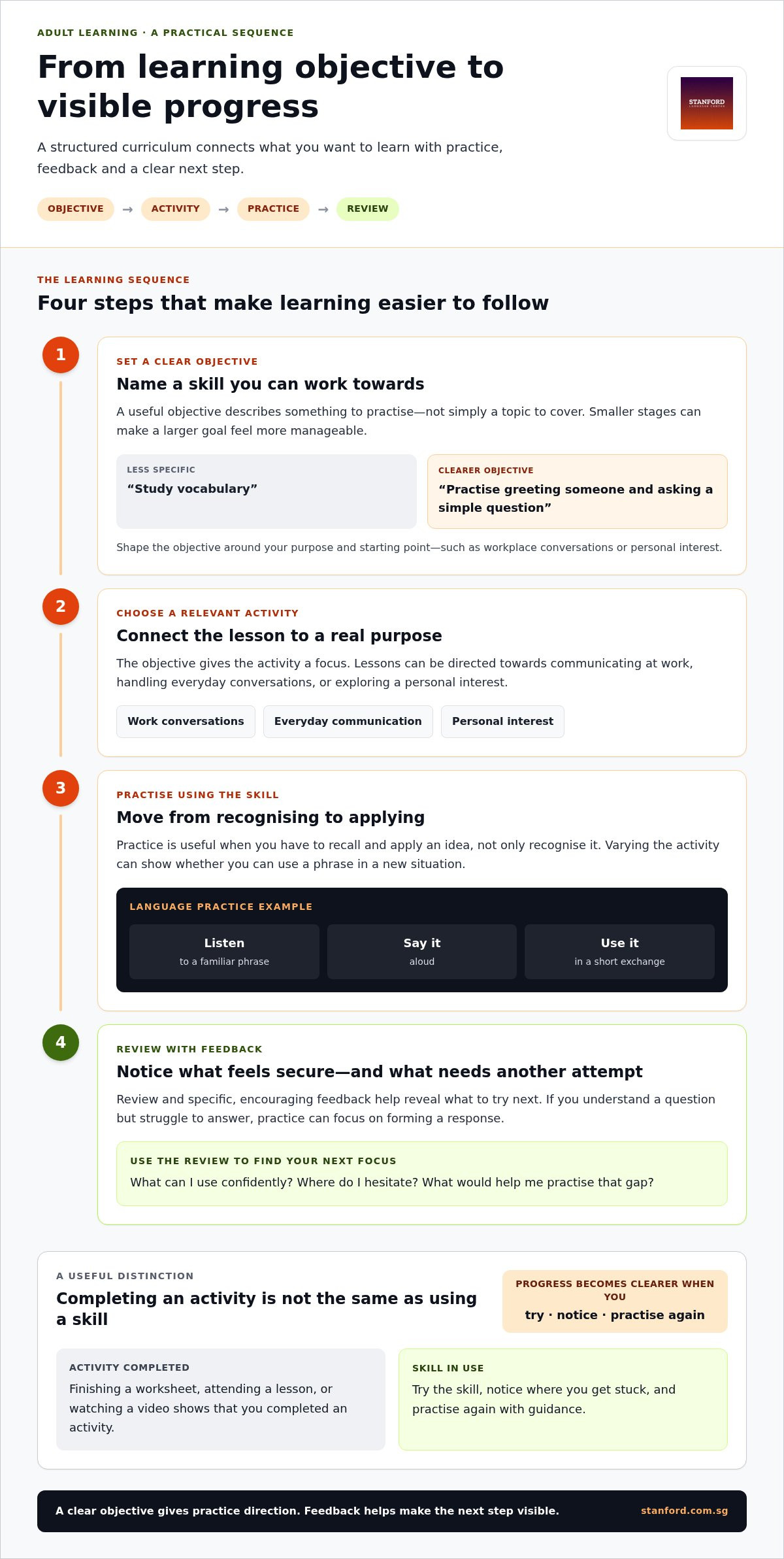
A curriculum supports learning by connecting four things: a clear objective, a relevant activity, a chance to practise, and a way to review what happened. The objective gives you a focus, practice puts the skill to work, and feedback helps reveal what feels secure and what needs another attempt.
That distinction matters. Finishing a worksheet, attending a lesson, or watching a video shows that you completed an activity. It doesn’t, on its own, show that you can recall or use the skill. Progress becomes easier to understand when you can try the skill, notice where you get stuck, and practise again with guidance.
Clear objectives make progress easier to follow
A useful objective describes a skill you can work towards, not just a topic to cover. For example, “practise greeting someone and asking a simple question” gives a language learner a more concrete focus than “study vocabulary.” Breaking a larger goal into smaller stages can make the next step feel manageable rather than overwhelming.
Practice and review help learners use what they study
Practice is useful when you have to recall and apply an idea, not only recognise it. You might listen to a familiar phrase, say it aloud, then use it in a short exchange. Changing the activity gives you more than one way to work with the same skill. It can also show whether you can use a phrase in a new situation, not just in one familiar example.
Feedback helps pinpoint the next useful adjustment. If you understand a question but struggle to answer, practice can focus on forming a response. Addressing a gap while it’s visible can make it easier to work through. Specific, encouraging feedback helps you know what to try rather than simply hearing that an answer was right or wrong.
Reviewing material over time is another useful learning principle. Returning to a skill after a gap gives you a chance to recall and apply it again. The timing and amount of review will vary, and spaced practice doesn’t guarantee a particular result. It’s a practical way to keep earlier learning in view as you take on new material.
Adults exploring adult Chinese learning in Singapore can look for learning that links clear goals with practice and review, while keeping their purpose in focus.
Structured Curriculum vs Ad Hoc Study: What Suits Adult Learners?
The comparison below highlights common trade-offs. Your experience will depend on the course, the resources available, and how consistently you can study.
When a structured course may be especially useful
When flexible or self-directed learning can work well
Ad hoc study may suit you if you have a specific goal and dependable study habits, such as practising phrases for an upcoming conversation. It also gives you room to revisit a particular skill between lessons. Alongside a course, a short audio exercise or personal vocabulary notes can reinforce a current topic without replacing the course’s broader progression.
Keep independent study focused. Choose one practical target, such as practising a short introduction, and set a point to review how confidently you can use it. Periodic check-ins help you see whether your approach is still serving your goal or needs adjusting.
How Can Adults Choose a Curriculum That Fits Their Goals?
A course is easier to stick with when its learning path suits both your goal and your routine. Use this sequence to assess whether a curriculum feels relevant and manageable:
- Define the goal. Name a situation where you want to use the skill, rather than relying on a broad aim such as “get better”.
- Check your starting point. Note what you already know, what feels unfamiliar, and where your confidence drops.
- Review the progression. Look for clear learning objectives and a sensible connection between topics, so you can see how the course builds towards your goal.
- Consider the format. Compare class, private, and online learning based on your schedule, preferred participation style, and the support you want.
Match the curriculum to a real-life learning goal
Balance learning structure with time and support needs
Before deciding, picture an ordinary week. Where could practice happen? Would a set class help you maintain continuity, or would online learning fit more comfortably? Can you make time to review feedback between lessons? Answering these questions helps you choose a format that supports steady participation rather than adding pressure.
If Mandarin is one of your goals, explore adult Chinese learning options and consider which learning format fits your aims and routine.
How Stanford Language Centre Applies Structure to Adult Language Learning
For adults, a useful curriculum needs more than a list of lessons. It should connect foundational work with practical goals while allowing for different starting points and study preferences. Stanford Language Centre offers structured beginner language programs and several ways for adults to learn.
The formats suit different preferences. Small-group classes give learners opportunities to practise alongside others. Private lessons offer one-to-one learning, while online classes provide a remote option. Corporate training is tailored to workplace learning needs. The format shapes the learning experience, but it doesn’t mean every learner will have the same pace or outcome.
Structured language options for different adult learners
Adults can study Mandarin, Thai, or Vietnamese through the centre’s language courses. Mandarin classes also include specialised options for Japanese and Korean speakers. These language and format choices let you consider both what you want to learn and how you prefer to participate.
For example, someone learning Mandarin for everyday communication may value opportunities to practise speaking and listening, while a learner with a workplace goal may want learning related to professional interactions. These are starting points for thinking about goals, not promises of a particular result. A structured course gives learners a guided route while they develop skills relevant to their own circumstances.
The benefits of a structured curriculum for adult learners are clearest when the plan feels connected to real use. If you’re considering Mandarin, an adult Chinese learning guide can help you explore learning with a practical goal in mind.
A practical next step for learners
Before choosing a course, write down three things: the language situation you want to handle, the format you’re most comfortable with, and the study routine you can realistically maintain. A goal such as taking part in a simple workplace exchange gives you a clearer starting point than a broad intention to “be fluent”. Your routine might include attending lessons and setting aside time to revisit what you’ve covered.
Then consider how the course’s progression relates to your goal. Think about whether the learning path starts at a suitable level, how practice fits the format, and what kind of support would help you stay engaged. A structured course turns an intention into a guided route; steady participation and practice remain part of your own journey.
Stanford Language Centre’s adult learning options include small-group, private, online, and corporate formats across Mandarin, Thai, and Vietnamese. Explore the centre’s adult language learning options and consider which language and format best fit your goals.
Turn Your Learning Goal Into a First Step
Your next step doesn’t need to be a complete study plan. Choose one situation where you’d like to use a new skill, then decide what a manageable first step could look like. Starting with a clear purpose can make it easier to choose learning that feels relevant to your life and worth making time for.
The benefits of a structured curriculum for adult learners aren’t about following a rigid path. They come from having enough direction to keep moving while making room to adjust as your needs and confidence develop. Progress can begin with one lesson, one useful practice session, and the willingness to keep going.
If learning Mandarin, Thai, or Vietnamese is part of your next goal, consider which adult learning format fits your routine. Explore adult language courses at Stanford Language Centre and choose a starting point that suits your goals.
Frequently Asked Questions
Is a structured curriculum better than learning on my own as an adult?
Neither approach is automatically better; it depends on your goal and how you prefer to learn. Independent study can work well for a focused task, such as learning a few phrases before a trip. A course may be more helpful if you want guidance through unfamiliar material or need help identifying gaps. You can also combine both: follow a course and use independent resources to practise topics that matter to you.
Can a structured curriculum be flexible enough for a busy adult?
Yes. Structure can give you a clear direction without dictating every moment of study. Start by choosing a format that fits your routine, such as online, small-group, or private lessons, then set aside realistic time to revisit what you learn. If work or family demands change, focus on maintaining a manageable routine rather than trying to make up every missed practice session at once.
How does a curriculum help adult learners stay motivated?
A curriculum can make motivation easier to maintain by connecting learning to a reason that matters to you. For example, if you want to participate more comfortably in workplace conversations, that goal can keep practice relevant. Noticing a small change, such as needing fewer prompts to respond, can also provide encouragement. Progress may vary, so use personal goals rather than comparing your pace with someone else’s.
What should an adult learning curriculum include?
How can I tell whether I am making progress in a course?
Check whether you can do more with the skill, not just whether you’ve completed the lesson. In a language course, you might compare how easily you can introduce yourself now with an earlier attempt, or try answering a familiar question without looking at notes. Keep brief examples of your practice and note where you still pause. Specific teacher feedback can help you interpret those changes.
Do adult learners need prior experience to join a structured language course?
No. A beginner course is designed for learners who are new to the language, so previous study isn’t essential for starting at that level. Stanford Language Centre offers structured beginner programs in Mandarin, Thai, and Vietnamese. If you have studied before, consider which skills feel familiar and which need attention so you can choose a starting point that makes sense for your current experience.
Can online lessons follow a structured curriculum?
Yes. Online lessons can follow a planned progression just like in-person learning. The format describes how you attend, not whether lessons have clear goals or build from one topic to another. Stanford Language Centre provides online language classes in Mandarin, Thai, and Vietnamese. As you compare learning options, look for a clear path through topics and opportunities to practise and receive guidance during lessons.