Did you know that professionals with Mandarin proficiency in Singapore can earn up to 40% more than their peers in similar roles? It’s a massive competitive advantage, yet many struggle to find the right way to learn chinese amidst a busy schedule. You’ve likely tried the popular apps only to find yourself stuck on complex characters or the dreaded four tones. It feels like you need a lifetime of study just to handle a basic business meeting. We understand the frustration of previous failed attempts and the constant lack of time for intensive study.
This guide shows you how to master Mandarin without the overwhelm. You’ll discover the most efficient pathways to success, from understanding tonal basics to choosing the right professional course in Singapore. We’ll explore conversational shortcuts that build real confidence and show you how to utilize government subsidies like NTUC UTAP to support your growth. Whether you want to navigate daily life more smoothly or boost your professional value, the right approach makes all the difference.
Key Takeaways
- Discover how Mandarin proficiency serves as a powerful driver for career mobility and salary growth in Singapore’s business landscape.
- Understand why the best way to learn chinese involves moving beyond apps to structured courses that build real-world conversational confidence.
- Simplify your journey by using Pinyin as a phonetic gateway to master pronunciation and navigate the language system with ease.
- Identify your specific social or professional goals to select a foundational roadmap that delivers the most practical results for your schedule.
- Learn how to leverage small group interactions and NTUC UTAP subsidies to maximize your learning efficiency and professional value.
Why Learning Chinese is a Strategic Move for Adults in 2026
In 2026, the ability to speak Mandarin has evolved from a unique resume highlight to a fundamental requirement for leadership in Asia. Singapore remains a central node for global trade; consequently, being bilingual is your ticket to the inner circle of business negotiations. Many professionals choose to learn chinese because they see the immediate impact on their career trajectory. It is no longer just a “nice-to-have” skill. It is a core professional competency in a market that prioritizes direct communication and cultural alignment.
Beyond the office, the cognitive benefits are striking. Learning a tonal language like Mandarin Chinese forces your brain to process pitch and melody, which keeps the adult mind sharp and resilient. It is a genuine workout for your gray matter. On a social level, you will find yourself more deeply integrated into the local community. Ordering food at a hawker center or chatting with a neighbor becomes a moment of connection rather than a source of anxiety. These small daily wins build a sense of belonging that makes life in Singapore much richer.
The Professional Advantage in Singapore
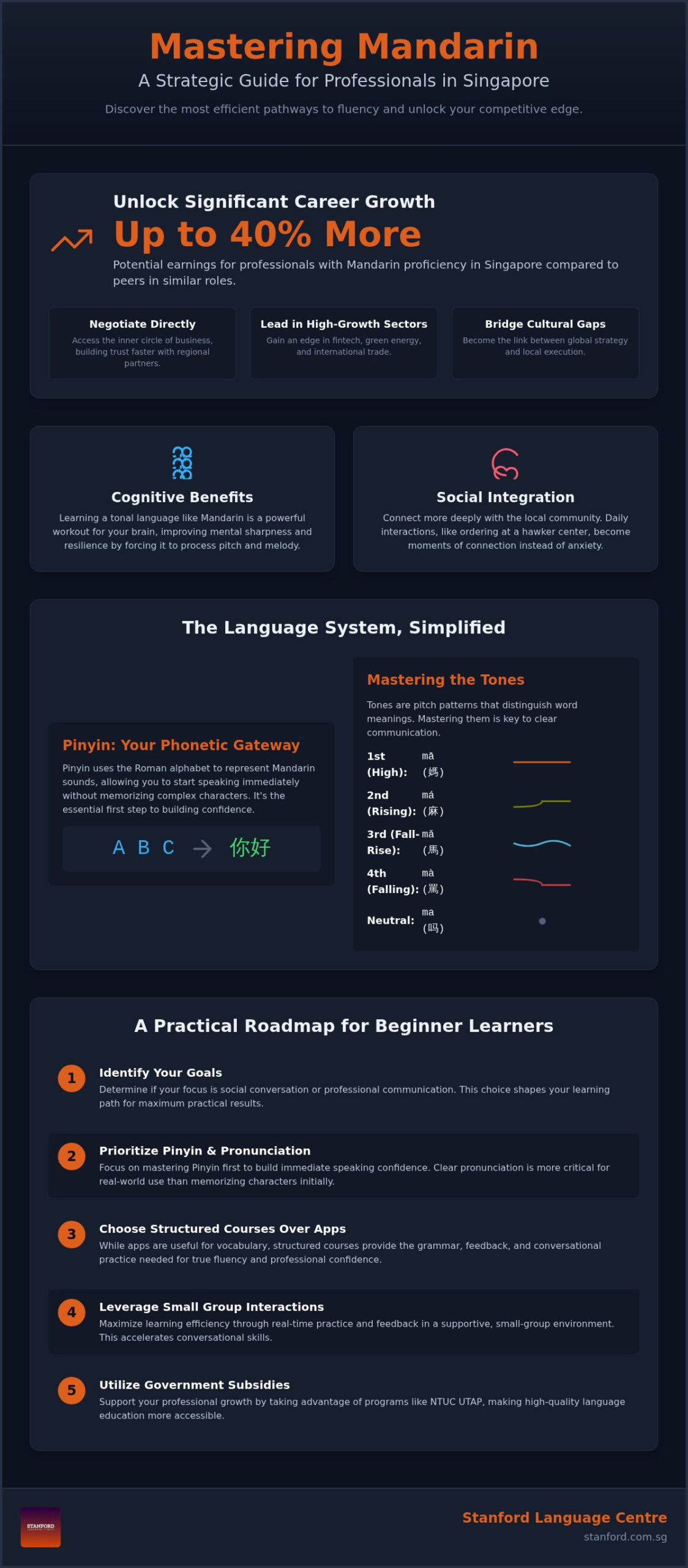
Proficiency in Mandarin provides a massive edge in high-growth sectors like fintech, green energy, and international trade. It is about more than just words. It is about understanding the nuance behind a deal. When you can speak directly with regional partners, you eliminate the friction caused by translators. This direct connection builds trust faster than any contract ever could. For those focusing on learning mandarin for work in Singapore, the benefits often manifest in smoother project management and quicker consensus in the boardroom. You become the bridge that closes the gap between global strategy and local execution.
Overcoming the “Adult Learner” Myth
Many adults hesitate because they believe the window for language acquisition has closed. Science suggests otherwise. While children learn through immersion, adults possess superior analytical skills. This allows you to grasp grammar structures and logical patterns much faster. For those who enjoy analyzing language rules, grammarindex.com provides a great reference for comparing different linguistic frameworks. If you decide to learn chinese as an adult, you are actually at an advantage. You can use your existing knowledge of other languages, like Japanese or Korean, to accelerate your progress through shared linguistic roots. You aren’t starting from scratch; you are building on existing mental frameworks. Setting a goal for conversational fluency is entirely realistic for a busy professional. You don’t need to be a poet. You just need to be a confident communicator who can hold their own in a meeting.
Demystifying the Mandarin Chinese Language System
Mandarin is the standardized dialect used across business, education, and government sectors in the Chinese-speaking world. It serves as the common ground that allows speakers of various regional dialects to communicate clearly. In Singapore, we primarily use Simplified Chinese for written media and official documents. This version was designed to make literacy more accessible by reducing the number of strokes in complex characters. When you begin to learn chinese, you’re tapping into a system built for efficiency and modern professional use.
Pinyin acts as the phonetic gateway that allows you to read and pronounce Mandarin using the familiar Roman alphabet. It bridges the gap between sounds and characters, making the initial stages of learning much less intimidating. By mastering Pinyin, you can start speaking useful phrases without needing to memorize thousands of strokes on day one. It’s a practical tool that turns a complex system into something manageable for a busy professional.
Tones and Pronunciation for Beginners
The four main tones, plus a fifth neutral tone, often feel like the biggest hurdle for new learners. However, they’re simpler than you think. Tones are just pitch patterns. Think of them as the natural musicality of the language. English speakers already use pitch to convey emotion or ask questions; Mandarin just uses pitch to distinguish word meanings. For example, a rising pitch might mean “hemp,” while a falling-and-rising pitch means “horse.” It’s a logical system that becomes intuitive with practice. For a deeper dive into mastering these sounds, see our guide on how to learn a tonal language.
Pinyin vs. Characters: Where to Start?
Focusing on Pinyin first builds immediate speaking confidence. This is vital for professionals who need to use the language in the real world. You don’t need to be a master calligrapher to send an email or a text. Modern digital tools allow you to type Pinyin on a keyboard, and the software suggests the correct characters for you. This shift has made it much easier to learn chinese in a digitalized environment. Organizations like the Critical Language Scholarship Program recognize Mandarin as a vital skill for global communication. Starting with the spoken word allows you to gain momentum quickly. Once you’re comfortable chatting, you can gradually transition to recognizing high-frequency characters. If you want a structured start, our private Mandarin lessons can help you focus on the vocabulary that matters most for your career.
Classroom vs. Apps: Finding the Best Way to Learn Chinese
Apps like Duolingo are fun. They keep you coming back with streaks and badges. However, they often leave you stranded regarding actual conversation. If you want to learn chinese for the boardroom, you need more than just digital flashcards. Apps are excellent for vocabulary retention; they struggle to teach the nuances of sentence structure and cultural context. You might learn the word for “apple,” but you won’t learn how to navigate a complex negotiation or build rapport with a client.
For busy C-suite executives, Private Mandarin Language Lessons offer maximum flexibility. You can schedule sessions around your board meetings. The focus is entirely on your specific industry needs. Small group Mandarin classes provide a “Goldilocks” zone. You get the benefit of peer interaction without getting lost in the crowd. It’s the perfect balance for most adult learners. For companies, Corporate Mandarin Language Training allows entire teams to master industry-specific vocabulary together. This ensures everyone is aligned when dealing with regional partners.
Why Structured Environments Win for Adults
Consistency is the biggest challenge for busy professionals. A structured environment provides the accountability you can’t get from a phone. When you have a set class time, you’re much less likely to suffer from app fatigue. You also get immediate feedback on tonal mistakes. This is crucial. If you practice tones incorrectly on an app, you’re just reinforcing bad habits that are hard to break later. A live instructor catches these errors instantly.
Learning in a classroom also builds your professional network. You’ll meet fellow adult learners in Singapore who share your career goals. These connections can be just as valuable as the language skills themselves. It feels like a community of peers rather than a solitary task. You support each other through the challenging parts of the journey.
Choosing Between Online and In-Person Lessons
The best way to learn chinese depends on your lifestyle. Online Mandarin classes are a lifesaver for remote workers or those who travel frequently. You get high-quality instruction without the commute. However, in-person interaction remains superior for picking up conversational nuances. Body language and facial expressions play a huge role in Mandarin communication. In a physical room, it’s easier to catch the subtle cues that define a successful interaction.
Many professionals now opt for hybrid options. You can combine digital tools with the rigor of a physical classroom. This approach offers the best of both worlds. You get the flexibility of digital resources and the interaction of a supportive community. The key is finding a format that fits your routine and keeps you motivated for the long term. Success comes from showing up consistently in an environment that supports your growth.
A Practical Roadmap for Beginner Mandarin Learners
Success in learning Mandarin doesn’t happen by accident. It requires a clear, manageable plan. Most professionals fail because they try to absorb too much at once without a core structure. By following a practical roadmap, you can learn chinese without feeling overwhelmed by the complexity of the language. Start by identifying your primary goal. Are you looking to build social rapport with neighbors, or do you need to lead a team in a Mandarin-speaking business environment? Your answer determines which vocabulary you should prioritize first.
Once your goal is set, enroll in a foundational Level 1 course that emphasizes verbal interaction. This stage isn’t about complex literature; it’s about building a functional base. You should also look into financial support immediately. Utilizing an NTUC Utap claimable Mandarin class can significantly lower your personal investment. Consistency is your best friend. Even 15 minutes of daily practice outside of class will keep the sounds fresh in your mind. Finally, don’t rush. Only move to Level 2 once you feel confident with basic tonal combinations and sentence patterns.
What to Expect in a Level 1 Course
A quality Level 1 program focuses on immediate utility for the adult learner. You’ll start with essential greetings, numbers, and basic workplace pleasantries. The goal is to move you from passive listening to active speaking as quickly as possible. You’ll learn how to introduce yourself, handle simple office interactions, and even order lunch with confidence. This stage is the most critical when you decide to learn chinese because it sets your phonetic foundation. For a more detailed breakdown of the curriculum, check out our Conversational Mandarin Level 1 guide. It outlines exactly how we help you build that initial momentum.
Maximizing Financial Support in Singapore
Singapore offers excellent support for working adults who want to upskill. The NTUC UTAP (Union Training Assistance Programme) is a primary resource for this. If you’re an NTUC member, you can claim a portion of your course fees for an NTUC Utap claimable Mandarin class. This subsidy makes professional training much more accessible and affordable. To qualify, you generally need to maintain a high attendance rate and be a member in good standing. The long-term ROI is clear. A small investment in time and subsidized fees can lead to significant salary premiums and career mobility. If you’re ready to start your journey with financial support, you can register for our NTUC UTAP claimable classes here today.
Why Stanford Language Centre is the Preferred Choice for Adults
In addition to financial aid, managing your time is crucial for success; if you need extra support at home to focus on your studies, you can visit Suria Employment Agency to find a domestic helper who fits your family’s needs.
Choosing where to learn chinese is a significant decision for any busy professional. You need a partner who understands your schedule, your career goals, and your specific learning style. Since 2004, Stanford Language Centre has focused on the unique needs of adult learners in Singapore. We don’t use intimidating academic methods or dense linguistic jargon. Instead, we prioritize practical results and conversational confidence. Our environment is warm, inclusive, and designed to lower the barrier to entry for everyone. We view ourselves as your supportive mentors on this journey.
Small group sizes are at the heart of our philosophy. This structure ensures every student gets ample speaking time and direct feedback from our experts. You won’t get lost in a crowded lecture hall or feel ignored. For those who require a higher degree of customization, our Private Mandarin Language Lessons offer the ultimate flexibility. We also provide Corporate Mandarin Language Training designed specifically for the Singaporean business landscape. This helps teams master the vocabulary needed to build rapport with regional partners and clients effectively.
Specialized Learning for Expats
We take pride in offering specialized programs for expats and foreigners. Japanese speakers can leverage their existing knowledge of Kanji to accelerate their reading and writing progress. Our curriculum highlights these parallels to save you time and effort. Korean speakers benefit from a supportive environment that focuses on mastering the nuances of the four tones. We understand the specific linguistic hurdles you face. Our goal is to help you navigate Singaporean life through language. It is about more than just vocabulary; it is about feeling at home and connected to your local community.
Pragmatic and Student-First Approach
Beyond language skills, managing a household effectively is key to settling in; for those seeking domestic support, finding a transfer helper singapore through Phluid Match can provide the balance needed to focus on your professional and personal development.
Our experienced instructors understand the adult learning curve better than anyone. They know you have a busy life and limited time for intensive study. That’s why we focus on practical results over academic complexity. You’ll learn the phrases and structures you actually need for work and social settings. We keep our approach straightforward and “no-frills” to ensure you get the best value for your investment. We are partners in your success and are invested in your personal growth. If you are ready to learn chinese in a supportive, professional environment, we are here to guide you every step of the way.
Join our next Level 1 Mandarin intake today and start your journey toward confident communication.
Take the Next Step in Your Professional Journey
Mastering a new language is one of the most rewarding investments you can make for your career and personal life in Singapore. You’ve seen how Mandarin opens doors in high-growth sectors, providing a clear edge in our regional business hub. While apps are useful for vocabulary, real confidence comes from structured, human-led interaction. By choosing a path that prioritizes conversational results, you’ll find that the adult learner hurdles are much easier to clear than you imagined.
With over 20 years of language teaching expertise, we’ve developed specialized expat and corporate programs that focus on what matters most: speaking with clarity. Our pragmatic, conversational-first methodology ensures you spend less time on theory and more time communicating. When you decide to learn chinese with us, you’re joining a community of supportive mentors dedicated to your success.
Start your Mandarin journey with our NTUC UTAP claimable courses today. We’re excited to help you unlock new opportunities and build deeper connections in the heart of Singapore.
Frequently Asked Questions
Is Chinese really the hardest language for adults to learn?
Mandarin is often perceived as difficult due to its tones and characters; however, it lacks the complex grammar found in many European languages. There are no verb conjugations or gendered nouns to memorize. Once you master the four basic tones through a structured course, the logic of the language becomes clear. Many adults find it easier to learn chinese than they initially expected because the sentence patterns are quite straightforward and practical.
How long does it take to become conversational in Mandarin?
Most professionals can achieve basic conversational fluency within three to six months of consistent study. A foundational Level 1 course typically covers essential greetings and workplace pleasantries in ten to twelve weeks. To reach a level where you can handle social interactions or simple business meetings, we recommend attending weekly small group classes and dedicating fifteen minutes a day to practice. Speed of progress often increases when you focus on high-frequency vocabulary.
Can I use SkillsFuture credits for Mandarin classes at Stanford Language Centre?
Stanford Language Centre does not accept SkillsFuture credits for its language programs. Instead, we offer NTUC UTAP claimable Mandarin classes that allow eligible union members to offset a significant portion of their course fees. This subsidy is designed specifically to support working adults in their professional development. We focus on providing high-quality, results-oriented training that delivers a strong return on your personal investment through enhanced career mobility and practical communication skills.
What is the difference between Mandarin and Chinese?
Chinese is an umbrella term for a family of related language varieties, while Mandarin is the standardized dialect used in business and education. In Singapore, Mandarin serves as the official mother tongue for the Chinese community and is the primary version used in professional settings. When you choose to learn chinese for work, you are almost always studying Mandarin. It ensures you can communicate effectively with partners across mainland China, Taiwan, and the global diaspora.
Are online Mandarin classes as effective as physical ones?
Online Mandarin classes are highly effective when they maintain small group sizes and interactive formats. They offer the flexibility busy professionals need to fit learning into a packed schedule without the commute. While physical classes provide better exposure to subtle conversational nuances and body language, our online programs use real-time feedback to ensure your tones and pronunciation are accurate. The best choice depends entirely on your personal routine and preferred learning style.
What is NTUC UTAP and how do I claim it for my language course?
NTUC UTAP stands for the Union Training Assistance Programme, which is a training benefit for NTUC members to help defray their cost of upskilling. You can claim up to 50% of the unfunded course fees, subject to an annual cap. To claim it, you must be a member in good standing and maintain a minimum attendance rate throughout the course. This support makes it much more affordable for professionals to enroll in a certified language program.
Do I need to learn how to write characters to speak Mandarin?
You don’t need to master complex characters to start speaking Mandarin confidently. Our Level 1 courses prioritize Pinyin, which uses the Roman alphabet to represent sounds phonetically. This allows you to focus on tones and conversational skills without getting bogged down by writing strokes. While recognizing high-frequency characters is helpful for reading menus or emails, your initial priority should be the verbal communication skills that deliver immediate value in your daily professional life.
What happens if I miss a lesson in a small group class?
If you miss a lesson in a small group class, we provide the course materials and summaries to help you catch up on the content covered. However, consistent attendance is vital for maintaining your learning momentum and meeting the eligibility requirements for government subsidies like NTUC UTAP. Since our classes are interactive, missing a session means losing out on valuable speaking practice. We encourage students to communicate with their instructors early if they anticipate a scheduling conflict.