What if the biggest barrier to your next regional expansion isn’t your logistics, but a simple misunderstanding during a business dinner in Bangkok? Many Singaporean leaders feel that Thai is too complex for their teams to master. You might worry that tonal languages take years to learn or that generic apps won’t help in a real negotiation. It’s a common frustration to see potential deals stall because of a missed cultural cue or a language gap.
Investing in corporate thai language training is a practical tool for growth, not just a soft skill. We’ve spent over 20 years helping professionals bridge these gaps with a student-first approach that prioritizes results over theory. You’ll discover how tailored programs provide functional Thai for meetings while fitting into your busy corporate schedule. We’ll also show you how to access cost-effective training through NTUC UTAP claims. This guide covers everything from mastering business etiquette to finding flexible lessons that deliver real results for your Singapore-based team.
Key Takeaways
- Understand how Thai proficiency strengthens the Singapore-Thailand trade corridor by reducing friction in cross-border operations.
- Learn the core components of effective corporate thai language training, from mastering the five tones to using essential office terminology.
- Compare the ROI of small group lessons for entire departments against the benefits of private 1-1 coaching for C-suite executives.
- Use our checklist to evaluate training providers based on their local accreditation and pragmatic teaching methods.
- Discover how to make training more cost-effective by utilizing NTUC UTAP claimable grants for foundational Thai courses.
Why Singaporean Businesses are Investing in Corporate Thai Language Training
Singapore serves as the regional nerve center for Southeast Asian operations. As we move through 2026, the trade corridor between Singapore and Thailand has become a critical engine for growth. It’s no longer just about tourism. It’s about high-stakes manufacturing and complex logistics. For many firms, corporate thai language training has shifted from a “nice-to-have” perk to a strategic necessity. Many leaders now view corporate thai language training as a high-yield investment rather than a cost center.
When your Singapore-based team can communicate directly with local Thai staff, friction vanishes. You don’t just save time; you save money. Misunderstandings on the factory floor or in shipping manifests lead to costly delays. Direct communication ensures that instructions are clear and expectations are met. It bridges the gap between the regional headquarters in Singapore and the boots on the ground in Thailand. Making the effort to learn the language signals sincerity. It builds a Thai-centric version of “Guanxi,” fostering deep-rooted trust that goes beyond the balance sheet.
The Competitive Advantage of Localized Communication
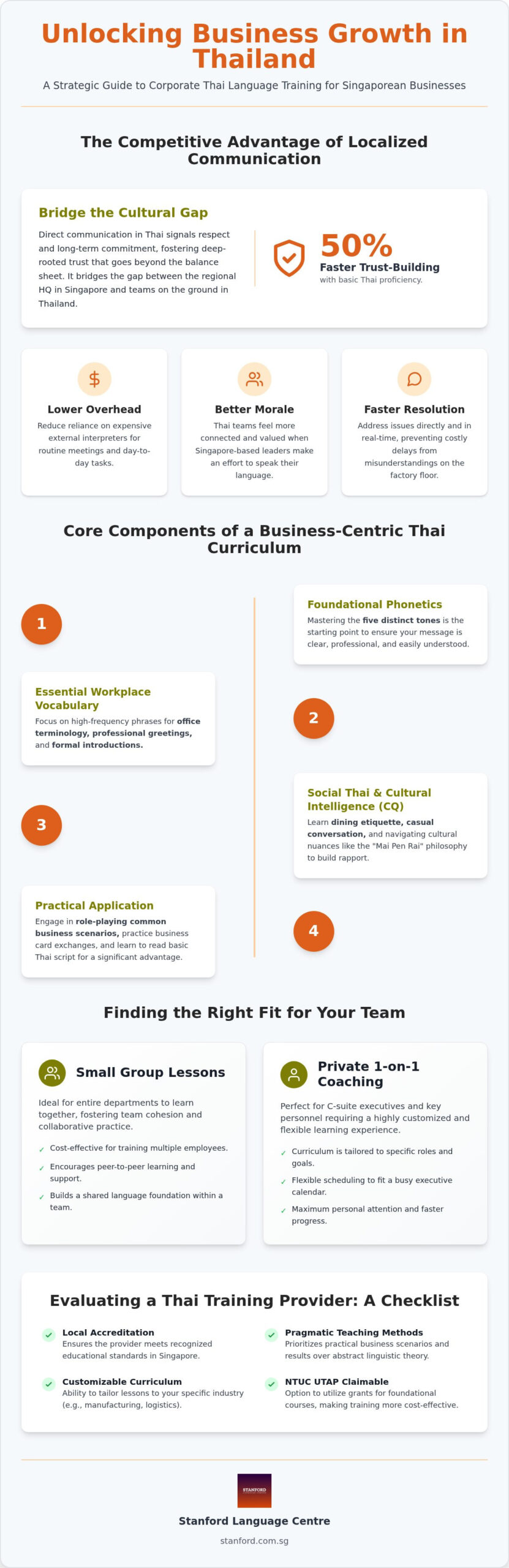
English is a global language, but it often misses the subtle nuances of Thai culture. Negotiations can stall when one side feels misunderstood. By investing in training, you reduce your reliance on expensive third-party translators for day-to-day tasks. It’s a more sustainable model for long-term operations. Industry observations suggest that basic Thai proficiency speeds up trust-building by 50%, allowing your team to move past the initial “acquaintance” phase much faster. It shows you’re genuinely invested in the local market.
- Lower Overhead: Fewer hours billed by external interpreters for routine meetings.
- Better Morale: Thai teams feel more connected to the Singapore HQ when leaders speak their tongue.
- Faster Conflict Resolution: Address issues in real-time without waiting for a translator to clarify points.
Thai for Regional Business Development
Success in Thailand depends on more than just a good contract. It’s about social etiquette and hierarchy. Whether your team is visiting Bangkok or industrial hubs like Chonburi and Rayong, knowing how to perform a proper “Wai” matters. It sets the professional tone for the entire meeting. The psychological impact of a Singaporean partner speaking the local language is profound. It signals respect and long-term commitment. This simple effort often makes the difference between a one-off deal and a lasting partnership. We focus on these practical applications to ensure your team is ready for the field from day one.
Core Components of a Business-Centric Thai Curriculum
A successful corporate thai language training program doesn’t just teach you how to order street food. It focuses on the specific interactions that happen between 9-to-5. We believe in a pragmatic approach. This means prioritizing the sounds and words that help you close deals and manage teams. You don’t need to be a linguist to be effective. You just need the right foundation.
Foundational phonetics are the starting point. Thai is a tonal language with five distinct tones. While this sounds intimidating, it’s manageable with the right guidance. Mastering these tones ensures your message is clear and professional. Beyond the sounds, we focus on essential workplace vocabulary. This includes everything from opening a meeting to understanding office terminology. You’ll learn how to navigate professional greetings and formal introductions with ease. If you are looking for a practical start, our Thai language training is designed specifically for adult learners in Singapore.
Networking often happens outside the boardroom. Social Thai is a vital component of any business curriculum. Knowing the proper dining etiquette and how to engage in casual conversation builds rapport. It’s also about Cultural Intelligence (CQ). Understanding the “Mai Pen Rai” philosophy is crucial. It translates to “it’s okay” or “don’t worry about it.” In a work context, this mindset impacts how Thai colleagues handle stress and deadlines. Learning to navigate this cultural nuance prevents frustration and improves team harmony.
Level 1: Building a Practical Foundation
Customizing Content for Your Industry
Generic programs often fail because they don’t speak your language. We tailor vocabulary for specific sectors like hospitality, banking, or marketing. If your team spends more time on calls than on emails, we shift the focus to verbal communication. We can even integrate your company-specific terminology into the lesson plans. This ensures that every hour of corporate thai language training delivers maximum value for your specific business needs.
Finding the Right Fit: In-House vs. Private 1-1 Thai Training
Choosing how to deliver corporate thai language training depends on your specific goals. There isn’t a one-size-fits-all answer. Some teams thrive in a collaborative environment. Others need the laser focus of a solo session. You need to balance the desired outcomes with your team’s existing workload. It’s about finding a rhythm that supports learning without causing burnout.
Small Group Lessons: Building Team Synergy
If you want to train an entire department, small group lessons offer the best ROI. Learning together creates a shared experience. It fosters a supportive corporate culture where colleagues can practice with one another. We typically recommend groups of 5 to 10 staff members. This size is large enough to be cost-effective but small enough for individual attention. It’s an excellent way to build synergy while tackling a new skill. For more details on choosing the right program, check out our Thai Language Course Singapore: 2026 Buying Guide.
Private 1-1 Coaching: Accelerated Learning
C-suite executives often have irregular schedules. For these busy professionals, private 1-1 coaching is the ideal solution. The pacing is completely customized. If a meeting runs late, the lesson can adapt. This format allows for focused attention on specific tonal mistakes or pronunciation issues that might be missed in a group. It also provides a safe space for confidentiality. Executives can discuss sensitive business topics or specific negotiation strategies without worry. It’s a high-speed path to fluency.
The 2026 hybrid workplace requires flexibility. You don’t have to choose between online and in-person anymore. Many Singaporean businesses now opt for a blended approach. In-person sessions are great for building initial rapport. Online classes keep the momentum going during busy travel weeks. This ensures training doesn’t disrupt office productivity. Ultimately, effective corporate thai language training must adapt to your team’s location and schedule to be truly successful.
Evaluating a Thai Training Provider in Singapore: A Checklist
Selecting a partner for corporate thai language training shouldn’t be a guessing game. You need a provider that understands the unique pressures of the Singapore business world. A generic language app might seem cheap, but it lacks the professional structure and accountability your team needs. Look for a school with a proven track record. For instance, we’ve been operating since 2004, bringing over 20 years of experience to the table. This longevity ensures you’re working with experts who have refined their teaching methods over decades.
Your checklist should include several key factors:
- Local Accreditation: Ensure the school is established and recognized within the Singaporean educational landscape.
- Financial Support: Check if the courses are NTUC UTAP claimable. This provides a significant financial advantage for your local workforce.
- Adult-Centric Approach: The curriculum must be designed for busy professionals, not students in a traditional academic setting.
- Specialized Programs: Look for Level 1 programs that are specifically built to get beginners speaking functional Thai quickly.
The Importance of a Tonal Language Specialist
Thai is famously tricky because of its five tones. Generic language schools often fail here because they treat Thai like a non-tonal language. If your team learns the wrong tones, they simply won’t be understood during a negotiation in Bangkok. You need instructors who understand the specific linguistic hurdles English speakers face when trying to hear and reproduce these sounds. For a deeper dive into this, read our guide on How to Learn a Tonal Language: A Practical Guide for Beginners. It’s about building a foundation that lasts.
Administrative Ease and Support
HR managers already have enough on their plates. You need a provider that makes enrollment and attendance tracking seamless. Detailed reporting is essential for corporate compliance and for evaluating your training ROI. Flexibility is also a deal-breaker. Working adults will inevitably miss a session due to urgent meetings or regional travel. Ask about the availability of make-up classes before you commit. A good provider should also offer clear progression paths, such as Level 2 courses, to keep your team’s skills growing over time. If you’re ready to see how we can help, our Corporate Thai Training solutions are built to fit your business schedule perfectly.
Stanford Language Centre: Tailored Thai Solutions for Your Team
Choosing Stanford Language Centre means choosing a partner with over 20 years of experience. We’ve been a fixture in the Singaporean training landscape since 2004. Our “student-first” philosophy is simple. We lower the barrier to entry by removing academic complexity. We know your team is busy. They need skills they can use during a Tuesday morning meeting in Bangkok, not just a grammar test. Our corporate thai language training focuses on what actually works in a professional setting.
Our specialized Level 1 courses are pragmatic. We focus on high-frequency phrases and the essential five tones. This ensures your team builds confidence from the very first lesson. We offer flexible corporate packages that adapt to your specific needs. Whether you prefer on-site lessons at your office or online sessions for a hybrid team, we make it happen. It’s about seamless integration into your workweek. We don’t believe in a one-size-fits-all approach; we believe in results.
Leveraging NTUC UTAP for Corporate Training
Maximizing your training budget is easier when you use local grants. Many corporate learners in Singapore are NTUC members. This makes our programs highly cost-effective for your staff. Singaporean workers can claim up to 50% of unfunded course fees through the Union Training Assistance Programme (UTAP). This is a significant advantage for 2026 training budgets. It allows you to upskill your team while significantly reducing the out-of-pocket expense.
We don’t just tell you about the grant. We help you navigate it. Stanford facilitates the process by providing the necessary documentation and guidance for your staff’s claims. It’s a straightforward way to provide high-quality corporate thai language training while keeping costs low. It ensures your team gets the professional development they need without straining company resources. We handle the administrative hurdles so you can focus on your business growth.
Start Your Team’s Thai Journey Today
Every business has different goals. Some need help with manufacturing logistics, while others focus on high-level banking negotiations. We recommend booking a consultation to assess your company’s specific needs. This allows us to tailor the vocabulary and scenarios to your specific industry. The Stanford advantage lies in our deep understanding of the Singaporean learner. We know the common pitfalls and how to overcome them quickly. Ready to bridge the communication gap? Contact us for a Corporate Thai Training Quote and let’s start building your team’s fluency today.
Empower Your Team for Regional Success
Investing in your team’s language skills is a direct investment in your company’s regional growth. We’ve explored how a business-centric curriculum focuses on immediate workplace application rather than academic theory. By choosing the right training format and leveraging local grants, you can equip your staff with the tools they need to navigate the Thai market with confidence. It’s about more than just words; it’s about building lasting professional relationships.
At Stanford Language Centre, we’ve spent over 20 years helping Singaporean professionals overcome the hurdles of tonal languages. Our corporate thai language training is designed for adult learners, ensuring that every lesson translates into real-world results. Whether you join us at our convenient City Hall location or prefer online sessions, we make learning accessible and low-stress. Our NTUC UTAP claimable courses also ensure your training budget goes much further.
Ready to take the next step? Request a Tailored Corporate Thai Training Proposal today. We’re here to help you unlock new opportunities for your team in Thailand.
Frequently Asked Questions
Is Thai difficult for English-speaking professionals to learn?
Thai is a tonal language, but it isn’t impossible for English speakers. The grammar is actually quite straightforward compared to many European languages. We focus on foundational phonetics to make the five tones manageable. Our student-first approach breaks down complex sounds into digestible segments. This ensures you can start speaking basic phrases quickly. Most professionals find that with the right guidance, they can master essential business greetings within just a few weeks.
How many hours of training are needed for basic business Thai?
Most learners achieve basic proficiency within 20 to 24 hours of training. It’s a fast-paced path to business readiness. This foundational level covers essential greetings, introductions, and workplace vocabulary. Our Level 1 programs are designed for speed. You won’t spend months on abstract theory. Instead, you’ll focus on high-frequency phrases used in Singaporean-Thai offices. This allows your team to apply their skills in real-world meetings almost immediately.
Can our Thai language classes be conducted at our office in Singapore?
Yes, we offer flexible corporate packages that include on-site training at your Singapore office. It’s about seamless integration into your workweek. This minimizes travel time for your staff and ensures training fits into their day. We also provide online sessions for hybrid teams. Our goal is to make corporate thai language training as convenient as possible. We adapt to your location and schedule to ensure maximum attendance and results.
What is the difference between conversational Thai and business Thai?
Conversational Thai focuses on everyday social interactions like ordering food or asking for directions. Business Thai targets professional settings like boardrooms, factories, and networking events. You’ll learn specific office terminology and hierarchical social etiquette, such as the proper “Wai” for different ranks. We also cover the nuances of “Mai Pen Rai” in a work context. This specialized vocabulary helps your team navigate negotiations and build trust with Thai partners more effectively.
How does the NTUC UTAP claim work for Thai language courses?
NTUC members can claim up to 50% of their unfunded course fees through the Union Training Assistance Programme (UTAP). This is a significant financial benefit for local workers. Stanford Language Centre is a recognized provider, and we help facilitate the process by providing necessary documentation. It’s important to check the current 2026 claim limits to maximize your training budget. This makes our high-quality programs very cost-effective for your Singapore-based team.
Do you provide Thai reading and writing classes for corporate clients?
Yes, we offer Thai reading and writing classes for clients who need more than just verbal skills. While speaking is usually the priority for business, being able to read signs, names, and basic documents is a huge advantage. We introduce the Thai script in a way that isn’t overwhelming. This helps your team navigate Bangkok independently. We can integrate literacy training into your customized corporate package based on your specific requirements and goals.
What happens if a staff member misses a scheduled corporate class?
We understand that busy professionals have unpredictable schedules. If a staff member misses a session due to work commitments, we offer make-up classes to help them catch up. We also provide attendance tracking for HR reporting to ensure accountability. Our corporate thai language training solutions include flexible options for those who miss a session. Our trainers are supportive mentors who ensure no one is left behind. This flexibility respects your team’s time.
Are your Thai teachers native speakers or experienced bilingual trainers?
Our trainers are highly experienced experts who understand the linguistic hurdles English speakers face. They bridge the gap between Thai and English fluently. This is crucial for mastering the five tones effectively. Many of our instructors are native speakers with a deep understanding of corporate culture. They don’t just teach words; they teach the cultural intelligence needed for successful business interactions. We’ve been refining this supportive approach since our establishment in 2004.